
Why do Different Types of Barcodes Exist for the Same Purpose?
January 25, 2026
Understanding How GS-1 128 Barcodes Track Shipments and Logistics Data
March 25, 2026
Wholesale food distribution runs on precision. Your trading partners expect accurate data before a pallet even reaches the dock. If your GS1-128 barcode is formatted incorrectly, shipments can be rejected, delayed, or flagged for chargebacks.
You need a clear structure, correct application identifiers, and high-quality print. This guide explains exactly how to format GS1-128 labels for wholesale food distribution so your shipping label meets compliance standards and supports full supply chain traceability.
Why Proper GS1-128 Formatting Matters in Wholesale Food Distribution
In food distribution, traceability is mandatory. Retailers, distributors, and food service operators depend on standardized barcode data to track product movement. The GS1-128 barcode carries structured data such as the global trade item number, production dates, lot codes, and the serial shipping container code.
Accurate formatting enables scanners to capture multiple data elements in a single scan. That supports inventory management, recall readiness, and automated receiving. When formatting errors occur, systems fail to interpret the data correctly. That creates delays and compliance issues.
Understanding the Structure of a GS1-128 Barcode
A GS1-128 barcode is built on the Code 128 symbology. It includes a 1-character Function Code at the start. This signals to scanning systems that the data follows GS1 standards.
Each data element is introduced by an Application Identifier. The Application Identifier defines what the data represents and how long it should be. Some fields are fixed length. Others are variable-length and must be followed by a separator if more data follows.
For example, AI 01 signals that a 14-digit global trade item number follows. AI 10 signals a batch or lot number. AI 11 signals a production date in YYMMDD format. AI 17 signals an expiration date.
The barcode must include a left quiet zone, a start character, the FNC1, the encoded data string, and a check character. The human-readable text printed below the barcode must reflect the encoded Application Identifiers.
Core Data Elements Required for Wholesale Food Case Labels
Global Trade Item Number AI 01
The GTIN identifies the trade item in your supply chain. In wholesale food distribution, the GTIN must be encoded as a 14-digit number in a GS1-128 barcode. It is always preceded by AI 01.
If your base GTIN is 12 digits, you must convert it to 14 digits by adding leading zeros when required. This ensures uniformity across distribution systems.
Lot or Batch Number AI 10
Food traceability depends on lot identification. AI 10 encodes a variable-length batch or lot number. This may include up to 20 characters. Because it is variable length, it must be followed by a separator character if another data field follows in the barcode string.
Production Date AI 11 and Expiration Date AI 17
Many wholesale buyers require the production date or expiration date. AI 11 encodes the production date. AI 17 encodes expiration date. Both follow the YYMMDD format.
These fields allow distributors and retailers to manage inventory rotation and food safety compliance.
Serial Shipping Container Code AI 00
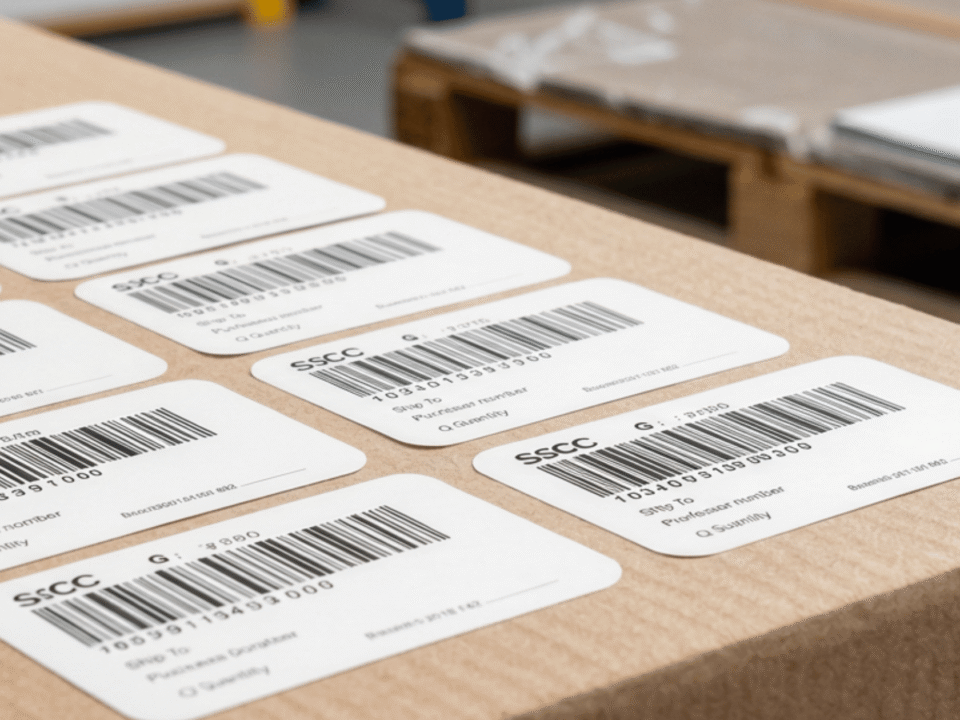
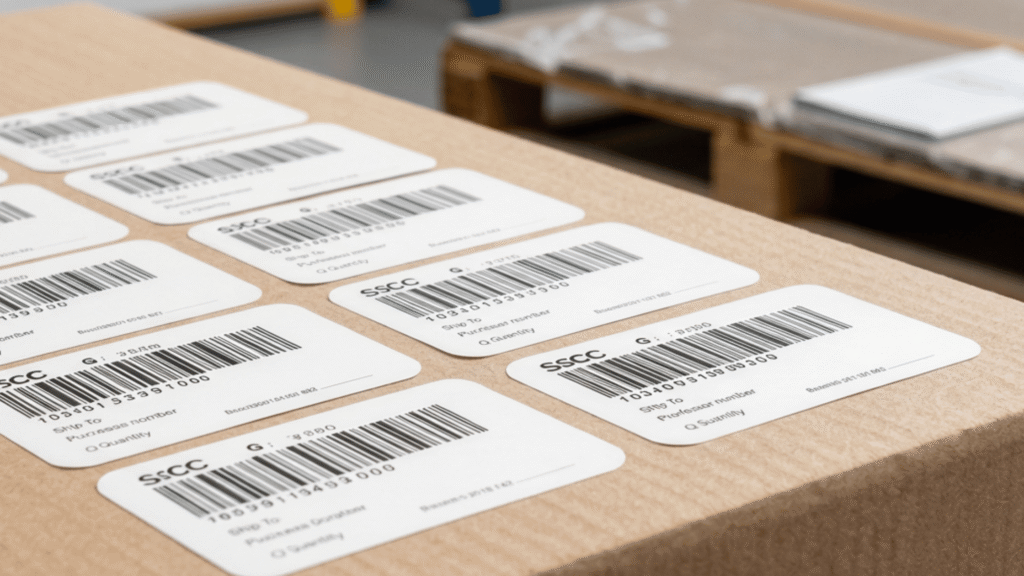
The SSCC identifies the logistic unit, such as a case or pallet. AI 00 precedes the 18-digit SSCC. The SSCC structure includes an extension digit, your GS1 company prefix, a serial reference, and a calculated check digit.
The combined length of the company prefix and serial reference must equal 17 digits before the check digit is calculated. Each SSCC must remain unique for at least 12 months.
Step-by-Step Process to Format GS1-128 Labels for Wholesale Food Distribution
Step 1: Assign Your GS1 Company Prefix
You must obtain a GS1 company prefix from your GS1 Member Organization. This prefix becomes the foundation for your GTINs and SSCC assignments.
Step 2: Construct the 14 Digit GTIN
Build your GTIN using your company prefix and unique item reference. Ensure it is 14 digits when encoded in AI 01 format. Confirm the check digit calculation is correct.
Step 3: Assign and Structure the SSCC
Create an 18-digit SSCC using AI 00. Assign a unique serial reference for each case or pallet. Calculate the check digit using the Modulo 10 algorithm. Do not reuse the SSCC within the minimum time frame required by GS1 standards.
Step 4: Select Required Application Identifiers
Determine which Application Identifiers your trading partners require. In wholesale food distribution, this typically includes AI 01, AI 10, and either AI 11 or AI 17. Some buyers may require additional identifiers depending on their systems.
Step 5: Encode the Data into a GS1-128 Barcode
Construct the data string in the correct sequence.
Begin with the FNC1. Add AI 01 and the GTIN. Add AI 17 or AI 11 if required. Add AI 10 for lot number. Ensure separators are used correctly after variable-length fields.
Step 6: Build the GS1 Logistic Shipping Label Layout
The GS1 logistic shipping label typically includes multiple zones. Each zone may contain text or barcodes. The bottom zone commonly carries the SSCC encoded in a GS1-128 barcode.
Your shipping label must include both human-readable information and machine-readable barcodes. The barcode height should meet the minimum specifications. Print quality must comply with ANSI barcode print guidelines to ensure reliable scanning.
Label Layout Requirements and Zone Structure
Wholesale food labels often follow a three-segment layout.
Supplier Segment
This area contains your company name, address, and contact details.
Customer Segment
This area contains the purchase order number, ship to location, and destination information required by trading partners.
Carrier Segment
This area may contain routing codes, shipment numbers, or final destination identifiers.
Place the SSCC at the bottom of the label. Maintain proper quiet zones. Ensure barcode height meets the 1.25-inch guideline where required. Always test print samples to verify scan reliability.
Common Formatting Errors That Cause Chargebacks
Many chargebacks occur because of incorrect GTIN length, missing leading zeros, or improperly structured SSCC codes. Others result from failing to include required Application Identifiers.
Variable-length fields without proper separators can cause scanning failures. Low print quality can also result in unreadable barcodes. Always validate barcode symbols with verification tools before shipment.
Complying with Retail and Food Safety Standards
Retailers often publish labeling specifications based on GS1 standards. You must follow those zone and data requirements exactly. Deviations can lead to rejected shipments.
Correct GS1-128 formatting also strengthens recall readiness. If a recall occurs, your ability to trace cases through the supply chain depends on properly structured lot and SSCC data.
Strengthening Traceability Across Your Supply Chain
A properly formatted GS1-128 barcode links product, case, and shipment identities in a single, structured format. It improves warehouse scanning, supports automated receiving, and enables real-time visibility.
When you align GTIN, lot number, expiration date, and SSCC correctly, your trading partners can trust the data flowing through their systems. That strengthens long-term supply chain performance.
Final Implementation Checklist
- Confirm GS1 company prefix is valid.
- Verify GTIN is 14 digits in AI 01 format.
- Assign a unique SSCC using AI 00
- Confirm the lot and date fields follow the proper format.
- Validate separators after variable-length fields.
- Test barcode print quality
- Align SSCC with ASN data
Take the Next Step Toward Full GS1-128 Compliance
If you need compliant GS1-128 barcode labels and artwork for your wholesale food shipments, we at AccuGraphiX can help. We provide GS1-compliant barcode artwork, SSCC label support, custom barcode design, and professionally printed labels that meet your trading partner requirements. Our team works directly with you to ensure your GS1-128 barcode format is accurate and ready for distribution. With fast turnaround and hands-on guidance, we help you move forward with confidence and avoid costly labeling errors.