Preprinted Barcode Labels vs. In-House Printing: What’s the Verdict for Your Business?
November 1, 2026
A distributor orders 24-bottle cases of hot sauce, but the manufacturer also ships the same product in cartons of 12. Every bottle carries the same UPC. Scanning that code tells the warehouse which sauce is inside, but it says nothing about how many bottles are in the carton.
The cases need separate identification numbers so the distributor can tell them apart. For manufacturers, that means assigning the correct GTIN before worrying about the barcode printed on the box.
What Is a GTIN-14 and When Does a Case Need One?
A GTIN-14 is a 14-digit Global Trade Item Number used to identify trade items, including shipping cases and other packaging configurations. When a company sells the same product in different case quantities, those groupings are treated as separate trade items.
Think about how a warehouse processes an incoming shipment. Its inventory system already knows what a case GTIN represents: the product, the quantity packed inside, and the other details associated with that item. Scanning the barcode lets the receiving staff match the carton to the purchase order without having to open each box.
That doesn’t mean every cardboard container needs a new GTIN. A shipping box that’s assembled to fulfill a single customer’s mixed order may simply be a transport container. A standard case that distributors purchase and stock as a defined unit has a different purpose in the supply chain.
How Is a Case GTIN-14 Created?
Manufacturers usually begin with the GTIN already assigned to the individual product. GS1 provides a method for creating case-level identifiers when the carton holds multiple units of that same item.
The case GTIN-14 uses an indicator digit, the GS1 Company Prefix and item reference associated with the contained product, and a newly calculated check digit. Leading zeros are included where necessary to fit the required 14-digit structure.
Here’s where the indicator digit matters.
GS1 allows values from 1 through 8 to distinguish different fixed-measure groupings. A company could use 1 for a six-pack and 2 for a case of 24. Another manufacturer might use the same indicator digits for entirely different quantities. The numbers aren’t a universal code for pack sizes.
Instead, the product information associated with each case GTIN records the quantity.
The final digit serves a different purpose. Called the check digit, it’s calculated from the preceding 13 digits and helps detect errors in the identifier. Simply adding an indicator to an existing UPC without accounting for the correct structure and recalculating the check digit won’t produce a valid case GTIN.
There’s also an easier way to create these numbers without working through the calculations yourself. Through GS1 US’s case creation process, manufacturers can select an existing product, enter the quantity packed in the case, and use the system to assign the appropriate identifier.
Mixed cases are handled differently. If a carton contains several distinct products, you can’t derive its GTIN from the item reference of just one product inside. That grouping requires a separately assigned identifier with its own item reference.
GTIN-14 vs. ITF-14: What’s the Difference?
The GTIN belongs to the trade item. ITF-14 describes the barcode used to represent that number on packaging.
Look at a typical shipping carton, and you may see a barcode surrounded by a heavy black border, with 14 digits printed underneath. That’s an ITF-14 symbol. Its pattern of wide and narrow bars encodes the GTIN so a scanner can read it.
ITF-14 was developed for distribution applications, particularly cartons made from corrugated cardboard. It can carry a GTIN-14 or a shorter GTIN represented with leading zeros to make 14 digits. Those zeros don’t change the underlying identifier.
What it cannot carry is additional variable information, such as the production lot or expiration date.
A warehouse that requires those details may specify GS1-128 barcodes instead. GS1-128 uses Application Identifiers to distinguish the information encoded in the symbol. For example, (01) identifies the GTIN, (10) indicates a batch or lot number, and (17) identifies an expiration date.
The choice isn’t always up to the manufacturer. Retailers and distributors may have their own barcode specifications for receiving shipments. Check those requirements while designing the packaging, especially when lot tracking or date information is involved.
Printing ITF-14 Barcodes on Cases and Cartons
Even correctly prepared artwork can produce an unreadable barcode. Corrugated cardboard’s uneven surface and the way ink transfers during printing can distort the bars and spaces. The method used to mark the carton matters.
Printing ITF-14 Directly on Corrugated Boxes
Printing directly on the carton eliminates the need for separate labels, but the results depend on the press and the cardboard. Excess ink can close the spaces between bars. Poor contact with the printing plate may leave gaps.
For direct plate printing, ITF-14 uses a rectangular bearer-bar frame to help distribute pressure across the symbol. The blank areas on either side, called quiet zones, must also remain clear of text and graphics.
Check the barcode’s dimensions and placement against GS1 specifications before the cartons go to press.
Using Pre-Printed Barcode Labels
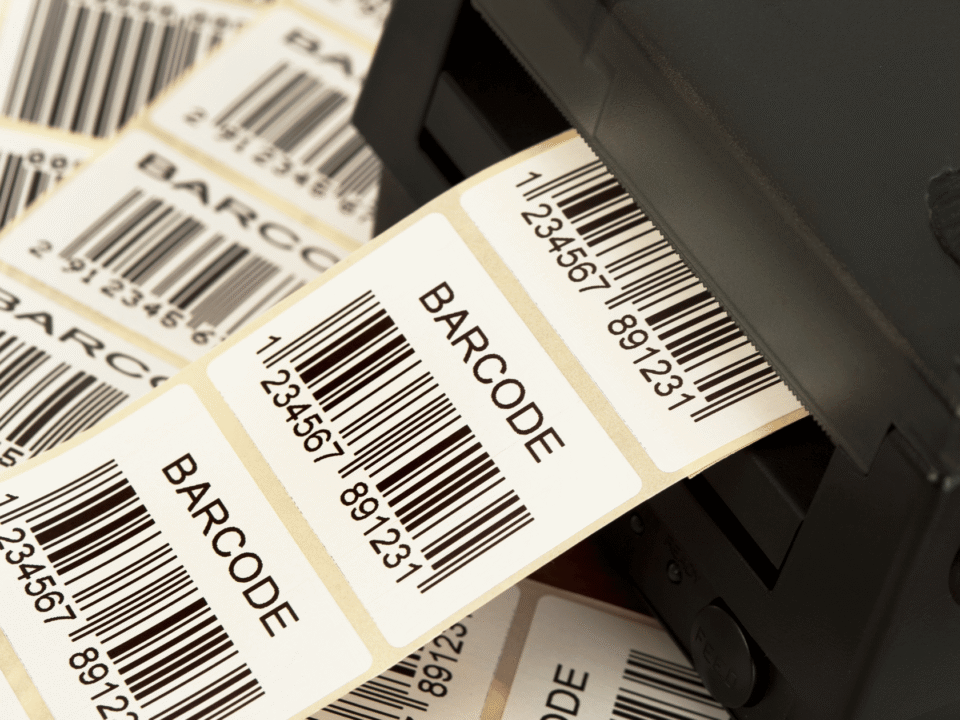
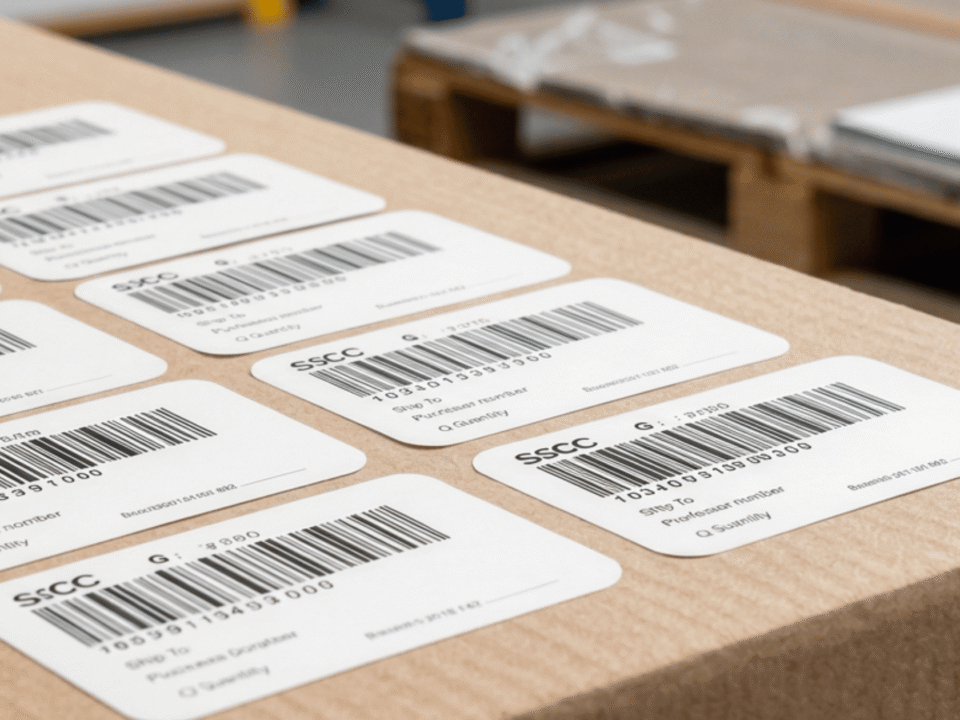
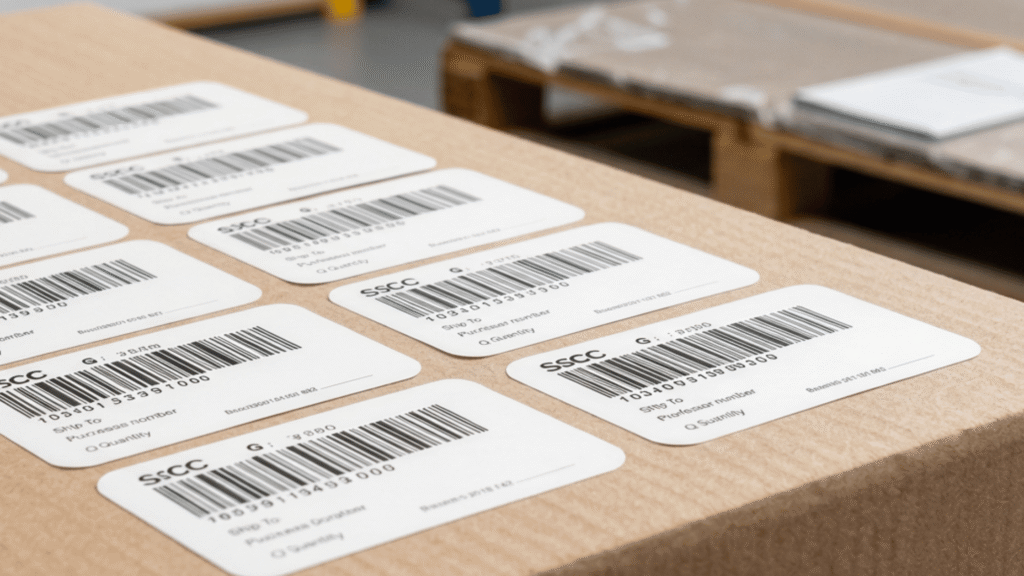
Preprinted labels offer more control over print quality and can be applied to cartons that share the same basic design. They also have different bearer-bar requirements. Horizontal bars along the top and bottom of an ITF-14 symbol are sufficient for labels, without the full frame used in direct corrugated printing.
The label still needs room for the complete symbol and its quiet zones.
A handheld scanner may successfully read a barcode that doesn’t meet the required print-quality grade. Verification equipment provides a more reliable assessment by measuring the symbol against defined standards. Testing before a full production run can prevent problems when cartons reach the distributor.
Get the Right GTIN-14 Barcode Artwork and Labels from AccuGraphiX
A poorly prepared case barcode can become an expensive packaging problem once production begins. Reprinting cartons or replacing labels takes time, and neither is appealing when orders are ready to ship. Getting the artwork right before it reaches the printer is a much better approach.
AccuGraphiX supplies GTIN-14 case-code artwork with full bearer bars for direct printing on corrugated cartons. For businesses applying barcodes to finished boxes, partial bearer-bar artwork and custom printed barcode labels offer alternatives.
The right choice depends on how your packaging is printed. A barcode intended for direct corrugated printing has different requirements from one produced on a separate label. AccuGraphiX can help you determine which available format suits your application, using your assigned GTIN, printing dimensions, and any specifications provided by your trading partners.
If you’re preparing a new case design or updating existing packaging, contact AccuGraphiX before sending your barcode artwork to production. Discuss your requirements and select the GTIN-14 artwork or printed labels that fit your operation.